10 hr 30 min
From Dublin: Kilkenny, Wicklow Mountains & Traditional Sheepdog Show
- Expert local guide
- Small group
- Skip-the-line access
- Free cancellation
Kilkenny Wicklow And Glendalough Tour & Sheepdog Show — Guided Day Trips from Dublin
Granite hills at dawn, a round tower by afternoon light.
Compare fares, pick the fit — all bookings are mobile-voucher and eligible for free cancellation where shown.
10 hr 30 min
9 hr
10 hr 30 min
| Experience | Duration | Rating | Skip-the-line | Guide | Small group | Free cancel. | Price | |
|---|---|---|---|---|---|---|---|---|
|
Guided Experience
Most popular
From Dublin: Kilkenny, Wicklow Mountains & Traditional Sheepdog Show
|
10 hr 30 min | ★ 4.8 | ✓ | ✓ | ✓ | ✓ | $34 | Book → |
|
Guided Experience
Wicklow Mountains, Glendalough & Kilkenny Day Tour from Dublin
|
9 hr | ★ 4.8 | ✓ | ✓ | ✓ | ✓ | €45 | Book → |
|
Guided Experience
Dublin: Wicklow Mountains, Glendalough & Kilkenny Day Tour
|
10 hr 30 min | ★ 4.4 | ✓ | ✓ | ✓ | ✓ | €40 | Book → |
Worth it for car-free first-timers; skippable for hikers
One coach covers both, plus a working border collie herding trial on a Wicklow hill farm — the part guests remember. Boarding is free to attend at the office itself (0 EUR entry), with the fare set by whichever operator listing you pick from the grid above. This Dublin day tour pays off for visitors with two or three days total who want the Sally Gap, the glacial valley and a walled city in one hit. Walkers wanting the Spinc ridge should rent a car instead.
Bottom line: If your Ireland trip is short and carless, kilkenny wicklow and glendalough tour tickets buy you a full county sweep no train timetable can match.
Comparing different kilkenny wicklow and glendalough tour & sheepdog show tours is a common step for visitors seeking a historic monastic site in County Wicklow. They complement each other; most visitors who do both call Wild Rover the more structured choice for exploring Glendalough's glacial valley. Regardless of your pick, securing your kilkenny wicklow and glendalough tour & sheepdog show tickets early is recommended to guarantee your coach departure.
|
Top pick Wild Rover |
Paddywagon Tours | |
|---|---|---|
| Departure Location | Gardiner Street, O'Connell Street, College Green | |
| Group Size Pacing | Up to 53 guests per coach | Up to 64 guests per coach |
| Walking Tour Inclusions | Guided historical walks in Kilkenny and Glendalough | Optional walking tours of same destinations |
| Sheepdog Demonstration Setting | Working sheep farm in Laragh, Wicklow | Traditional working farm in Wicklow foothills |
| Vehicle Wi-Fi Availability | Complimentary 4G Wi-Fi on all coaches | Complimentary on-board Wi-Fi and USB ports |
| Pricing Structure | Flat €43 rate for adults and students | Tiered pricing: €40 adult, €35 student/senior |
| See tickets & prices |
Verdict: Ultimately, the official kilkenny wicklow and glendalough tour & sheepdog show stands out for its high-quality guides and structured schedule. While both operators navigate the scenic Irish countryside, Wild Rover remains the preferred choice for depth and organization.
Hand-picked experiences loved by thousands of travelers
45 minutes
Free Cancellation
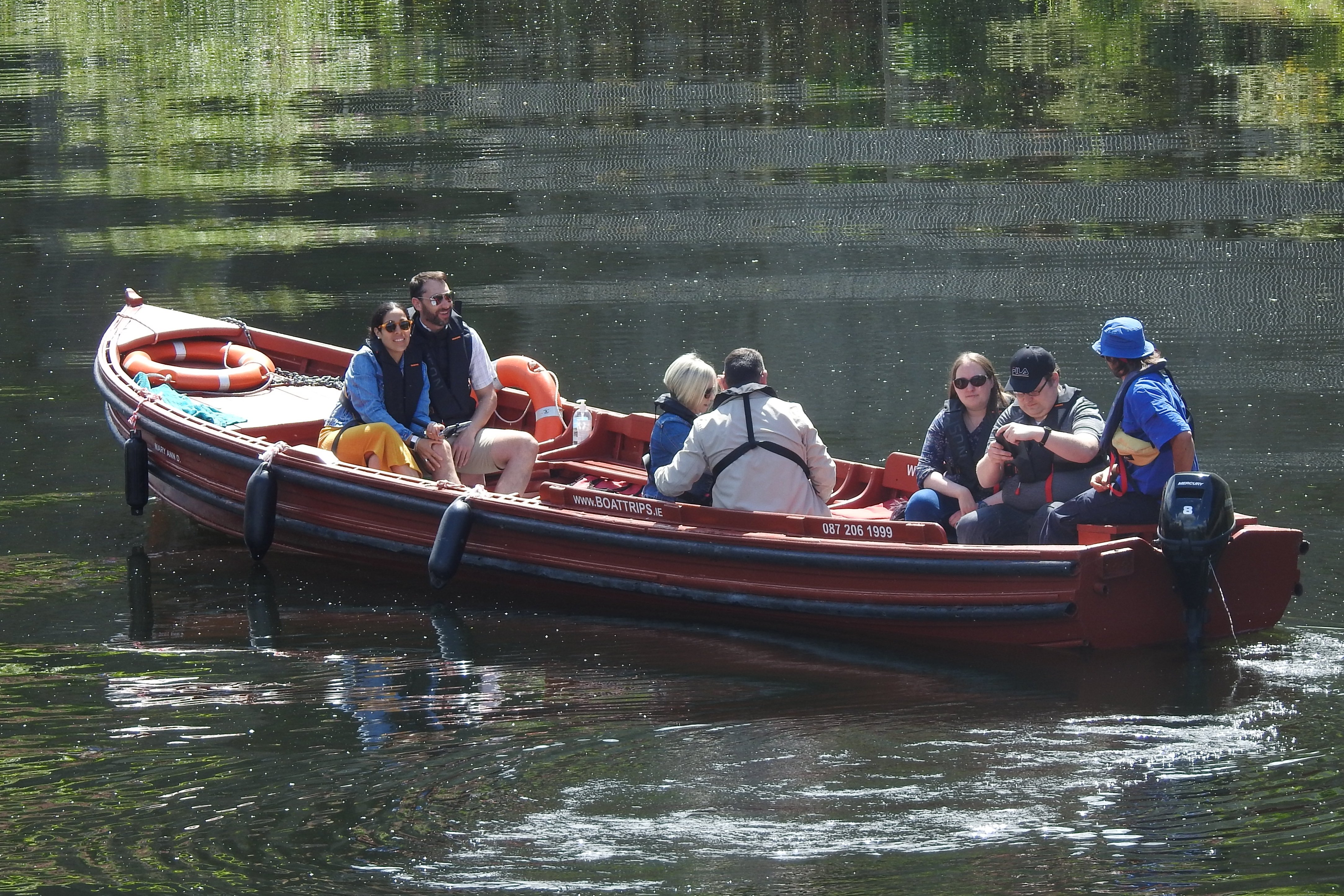
Sail past Kilkenny Castle and medieval landmarks on a relaxing 45-minute guided river cruise.
1 hour
Free Cancellation
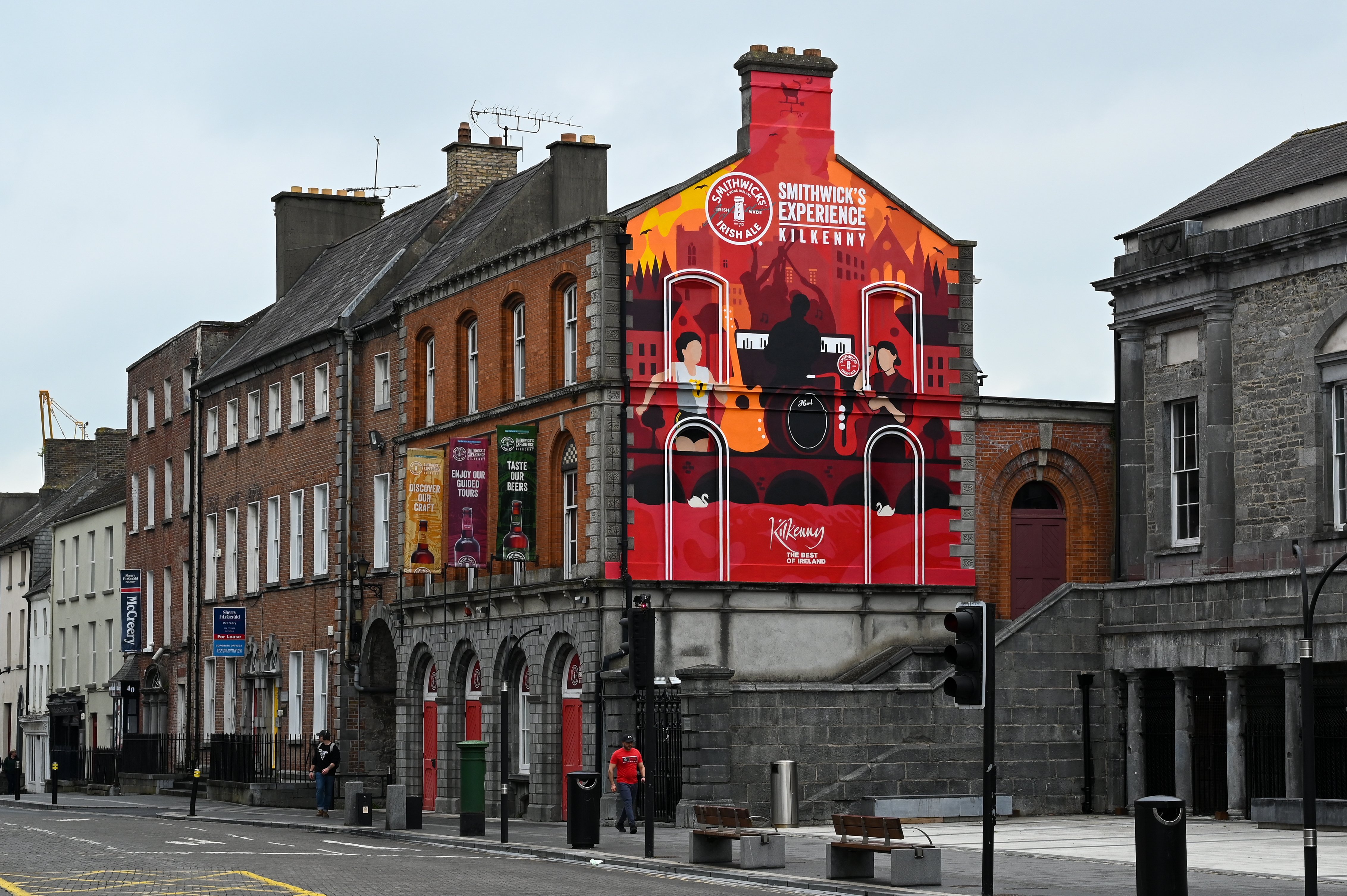
Discover the 300-year history of Ireland's famous red ale, explore the sensory brewing floor, and enjoy a fresh pint.
2 hours
Free Cancellation
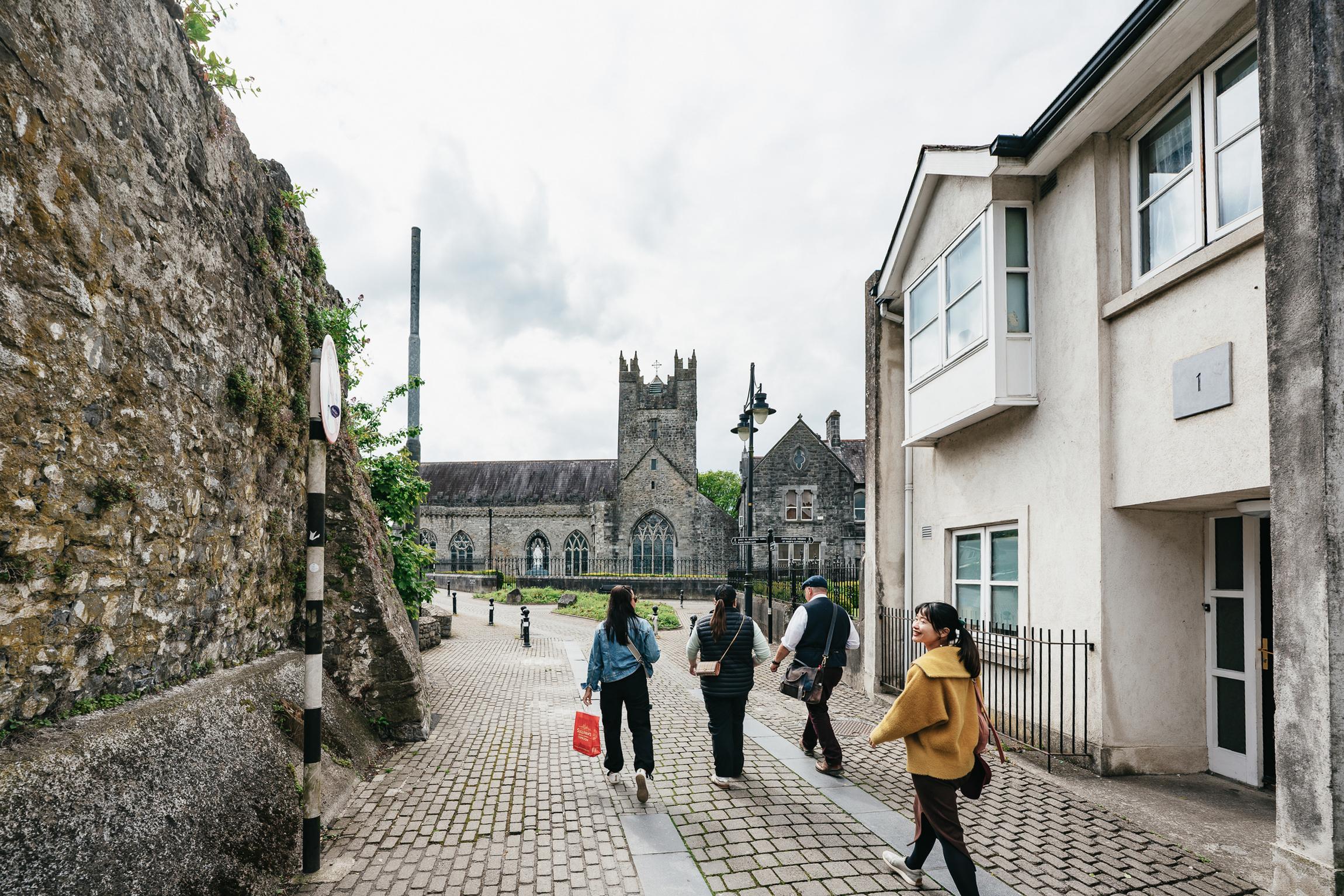
Discover Kilkenny's rich history and vibrant streets on an intimate walking tour led by a certified local expert.
1.5 hours
Free Cancellation
Discover the secrets of Kilkenny's historic streets on a lighthearted, magic-filled walking adventure.
75 minutes
Free Cancellation
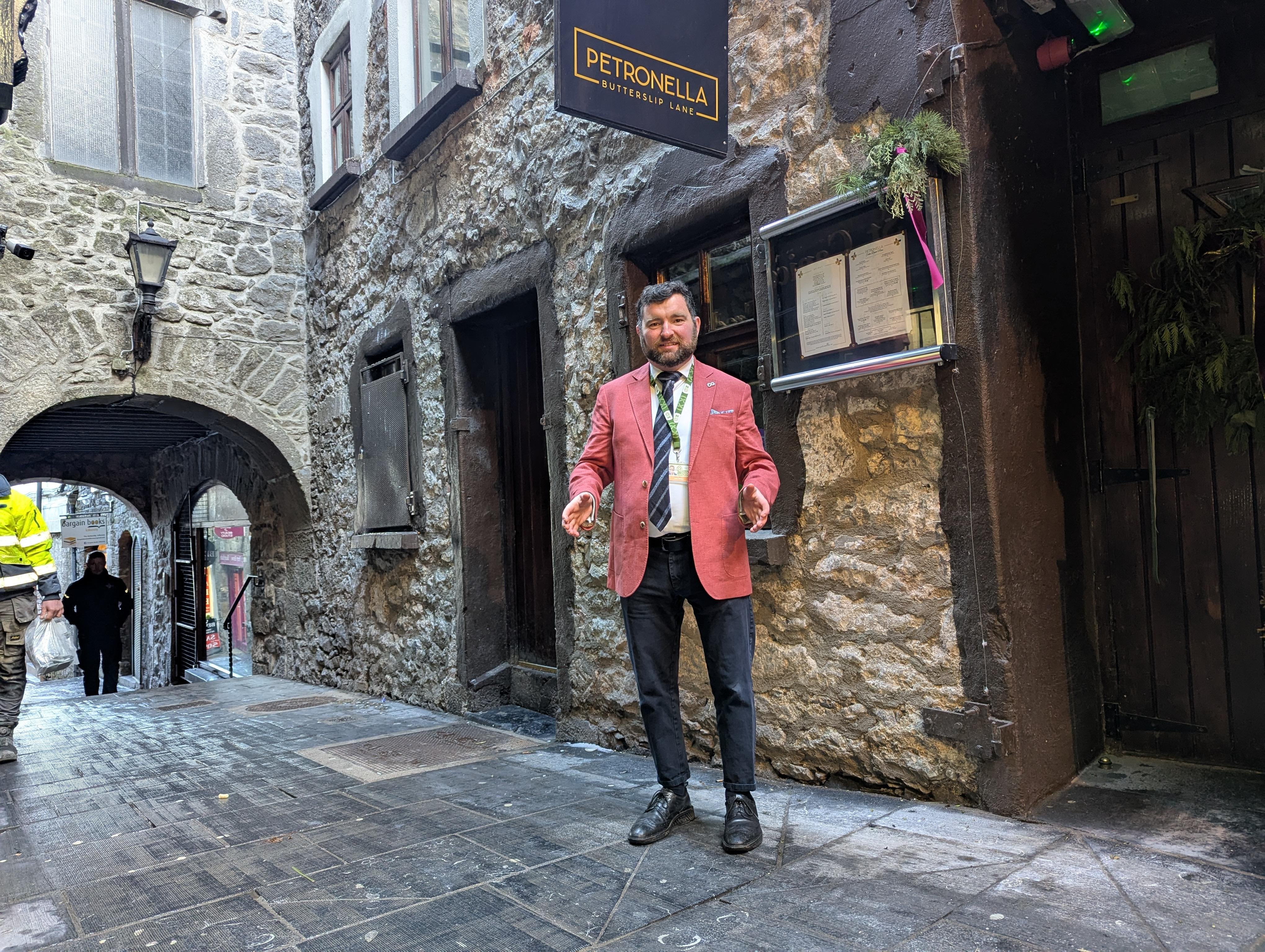
Uncover the sinister history, witch trials, and eerie alleys of Kilkenny on a 75-minute evening walk.
Self-paced
Free Cancellation
Explore Kilkenny’s historic 6th-century cathedral and scale one of Ireland’s only climbable round towers.
11 hours
Free Cancellation
Discover Ireland's ancient history and famous crystal craft on a customizable, private luxury journey from Dublin.
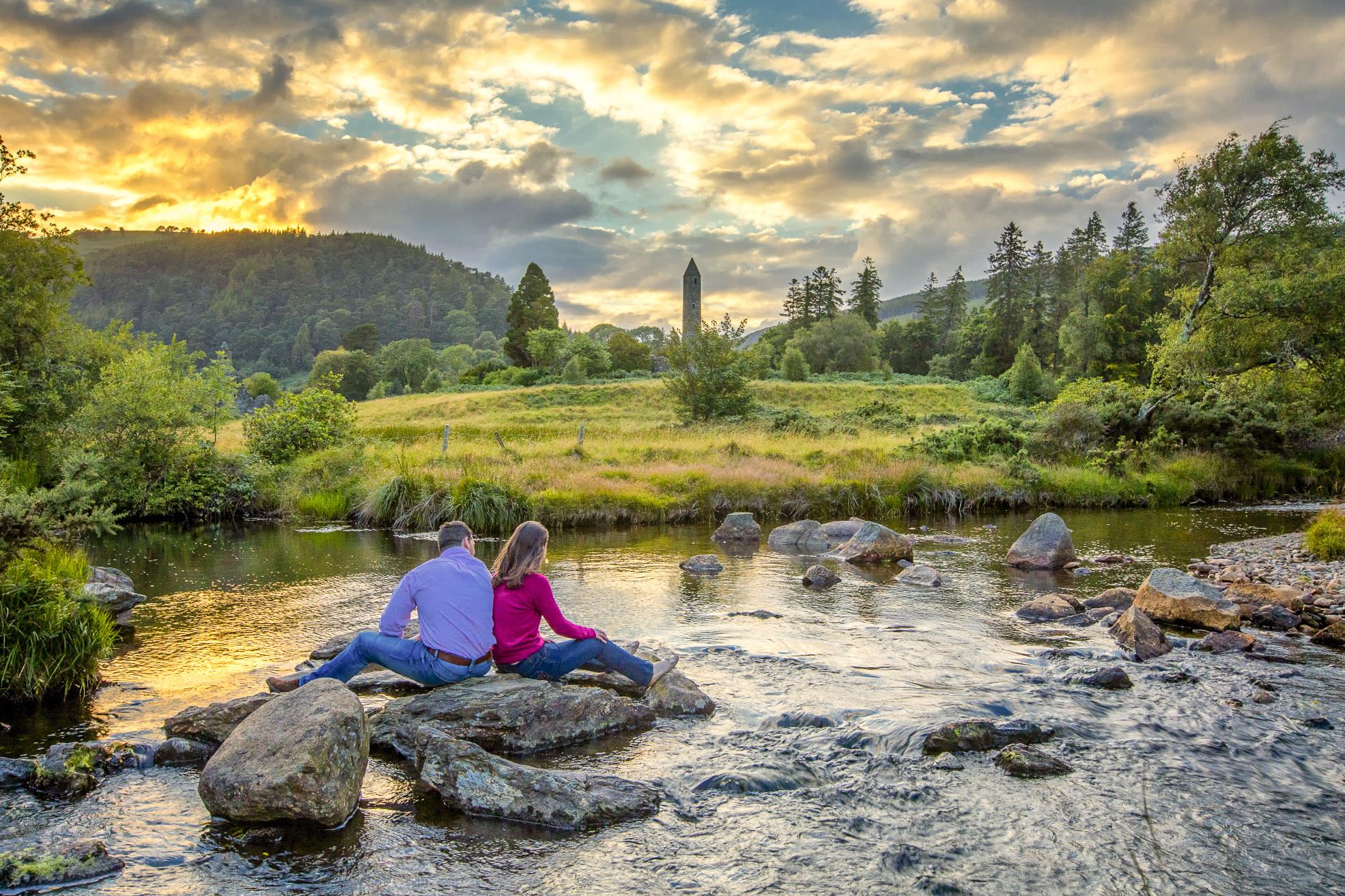
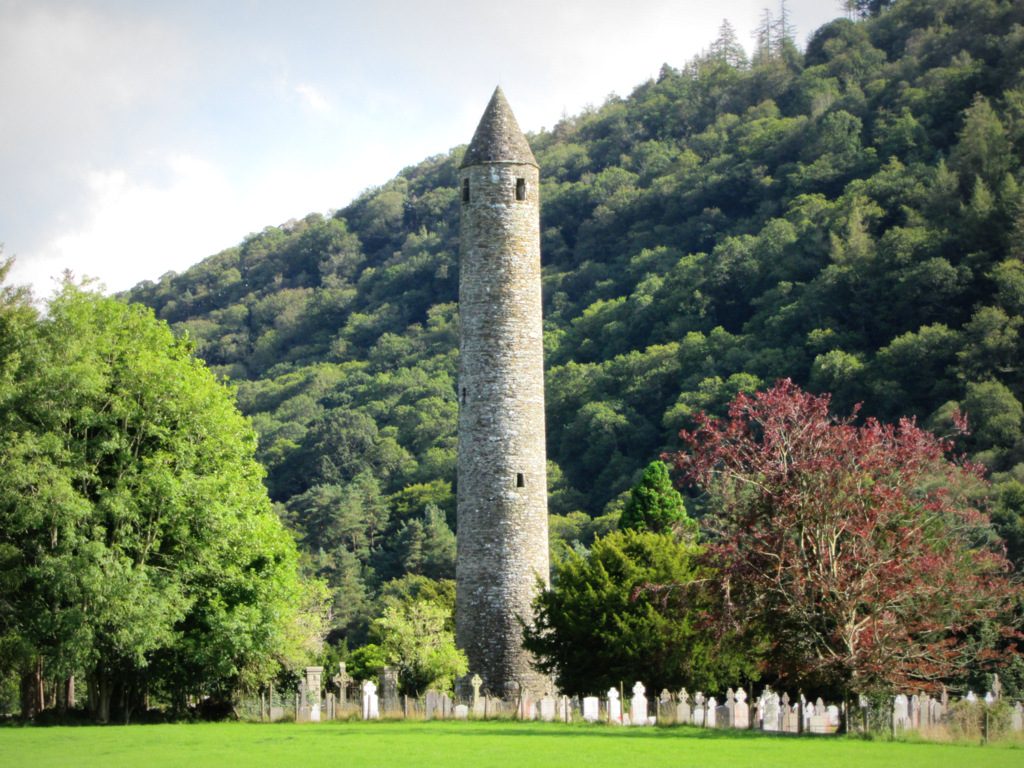
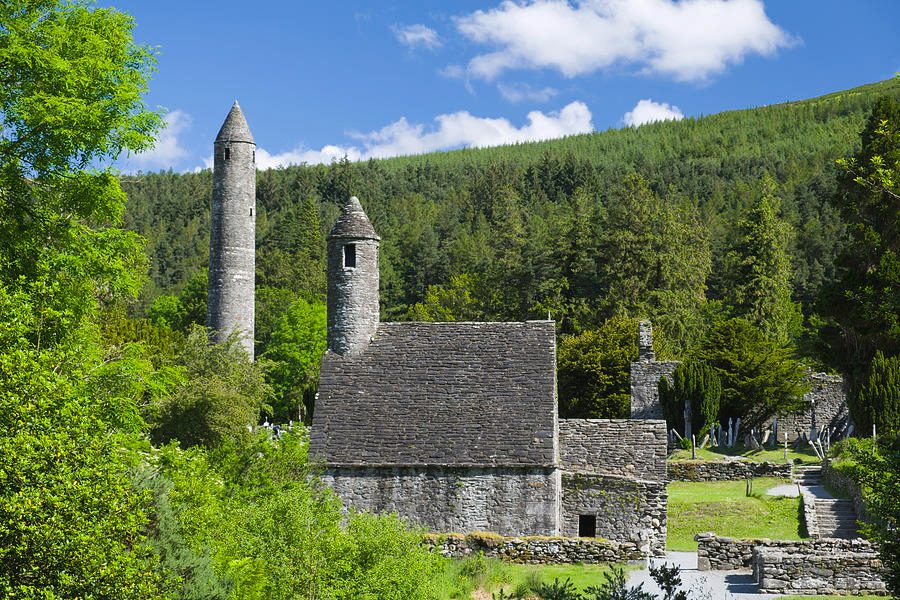
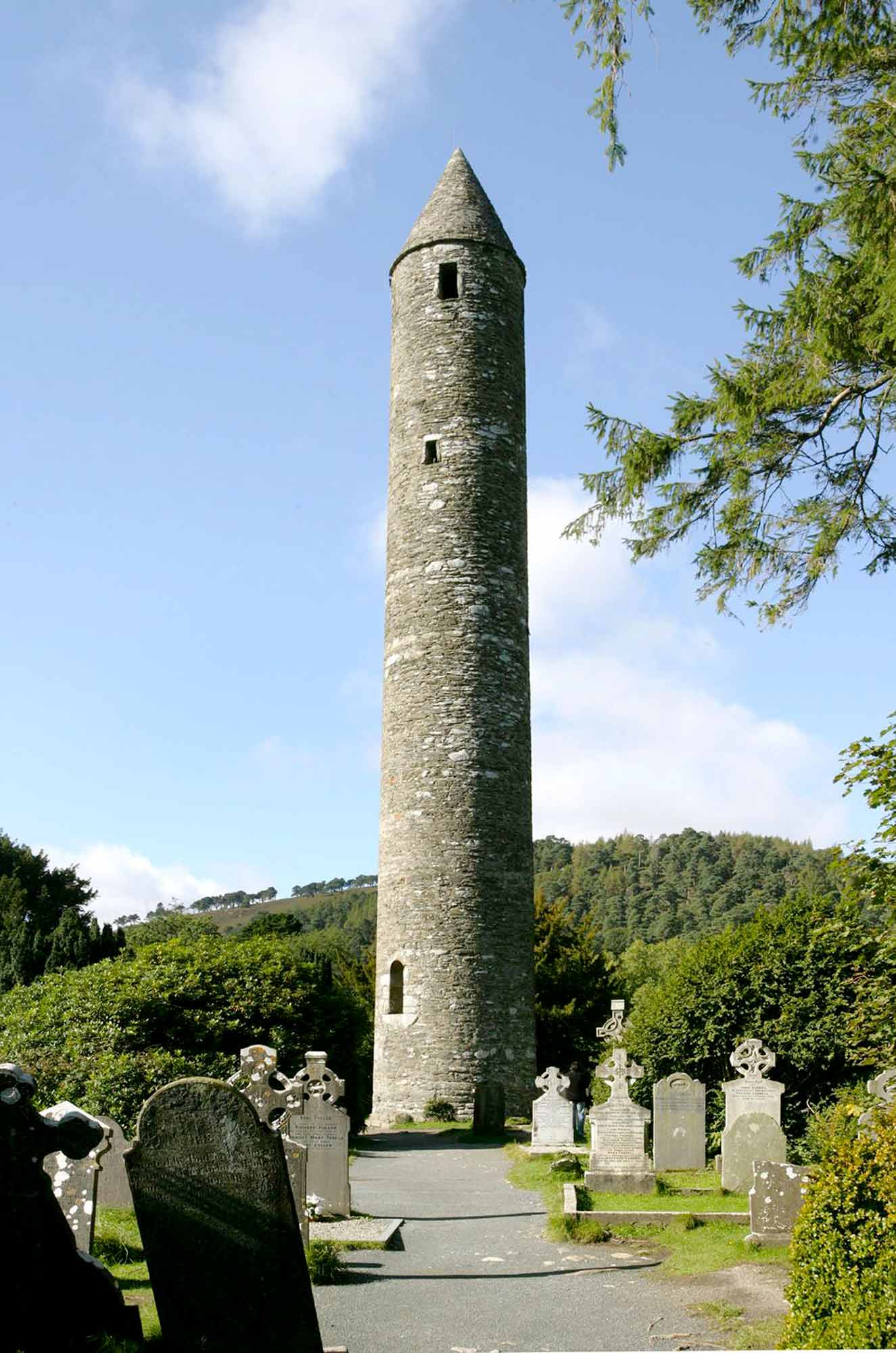
This 30-metre tower is one of the best-known features of the valley and a key vertical landmark in the monastic settlement. It is part of a wider early medieval site that stretches across a glaciated valley, giving visitors a rare mix of archaeology and landscape.
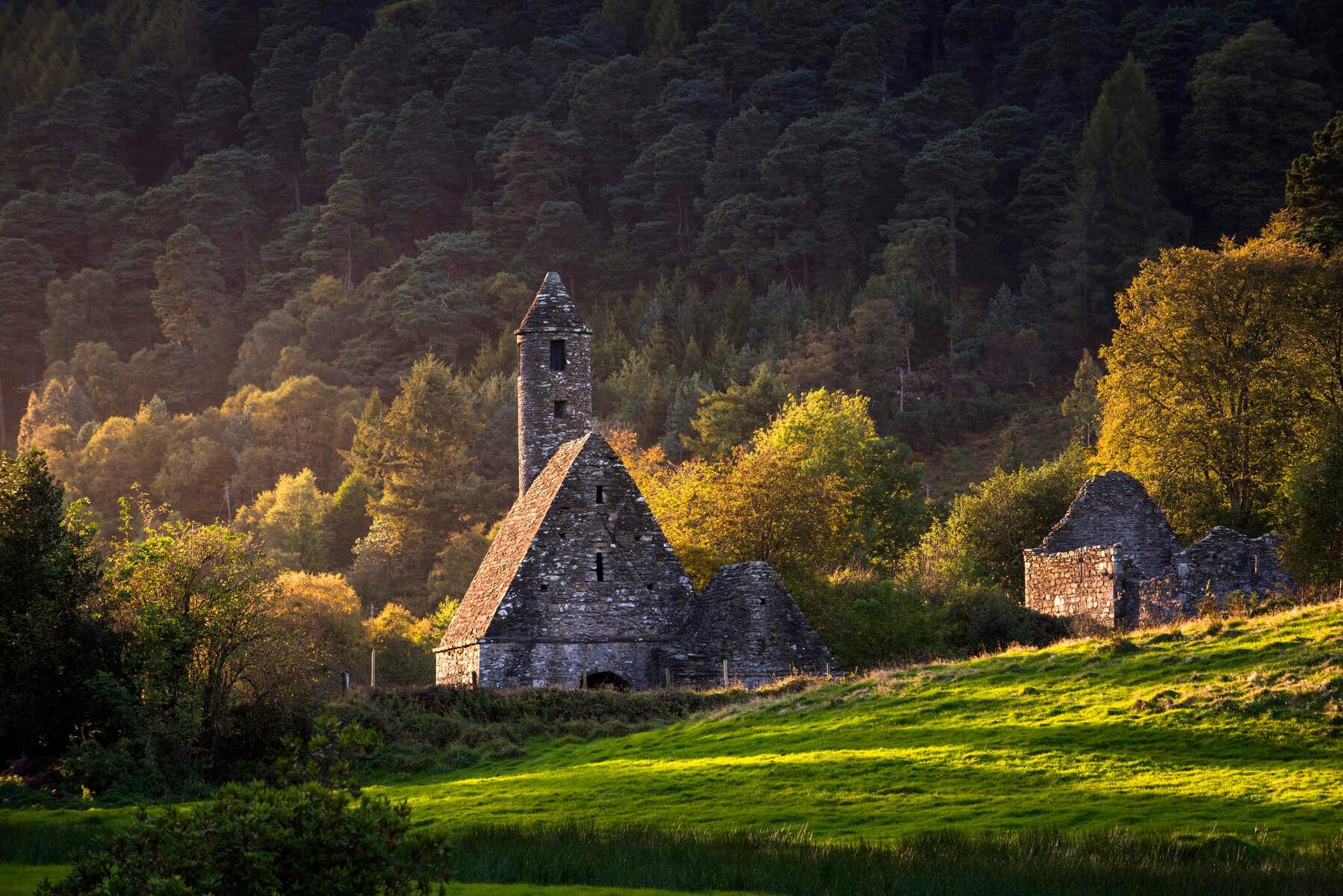
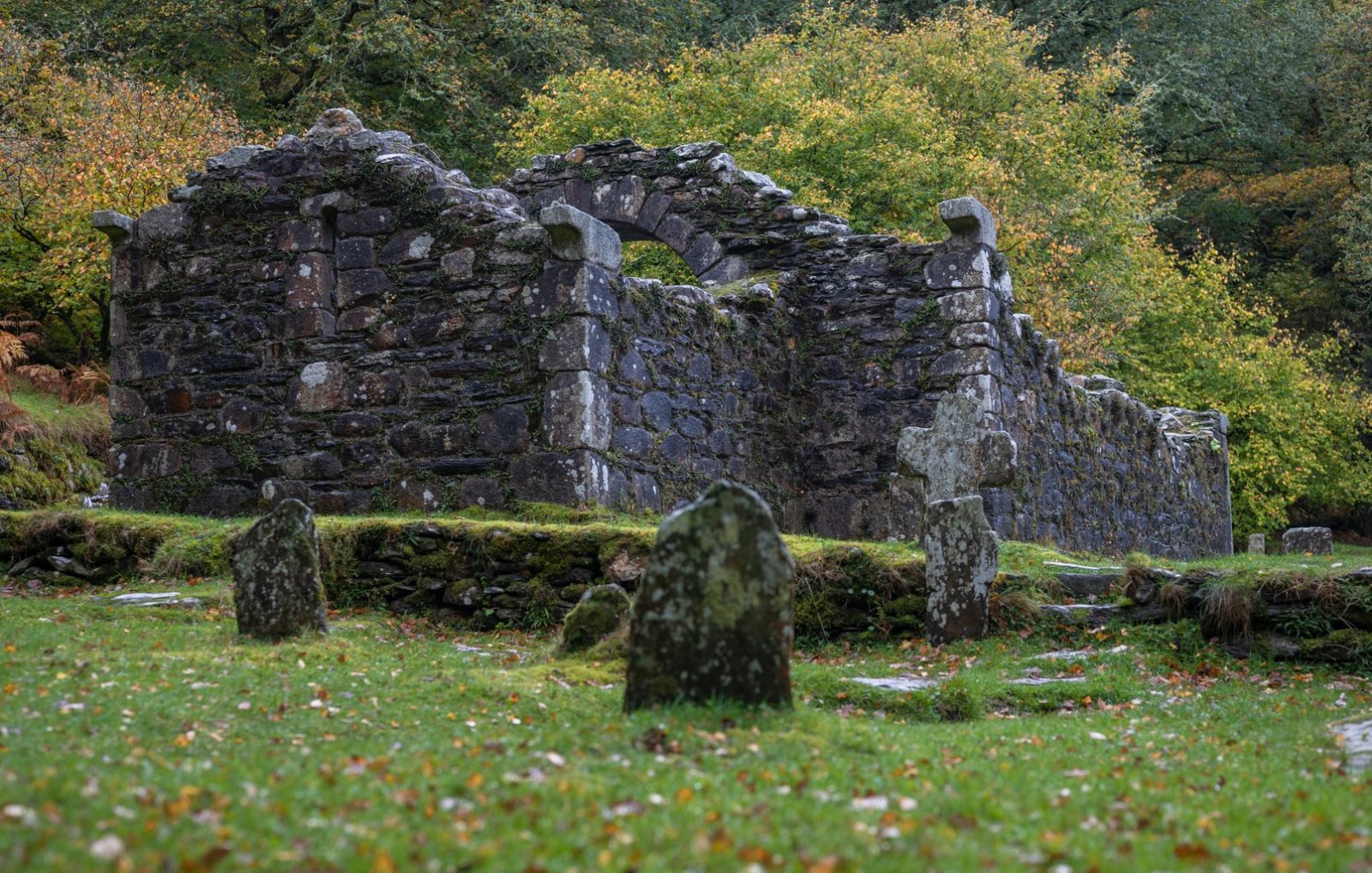
This church ruin is part of the clustered monastic remains associated with Saint Kevin and the early Christian community. The site’s buildings are spread across roughly 3 km, so even a short visit reveals how extensive the settlement once was.
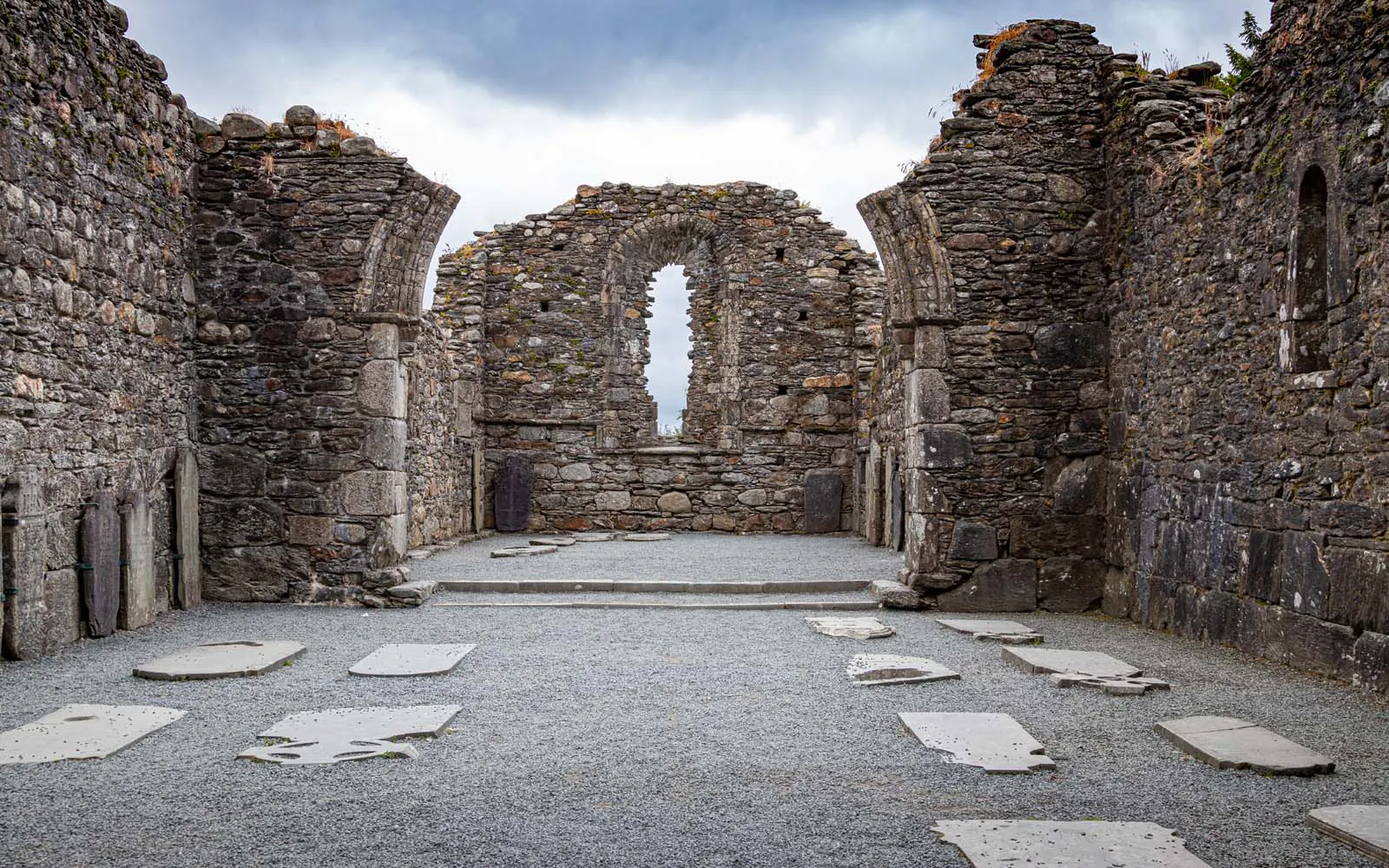
Despite the name, this is not a cathedral in the modern diocesan sense but a large medieval church ruin inside the valley complex. Its scale helps explain why Glendalough became one of Ireland’s most important religious landscapes.
Located near the Upper Lake, this church is one of the quieter, more atmospheric stops linked to the original settlement area. The lakeside position adds strong topographic contrast and shows how the monastery expanded beyond the main visitor area.
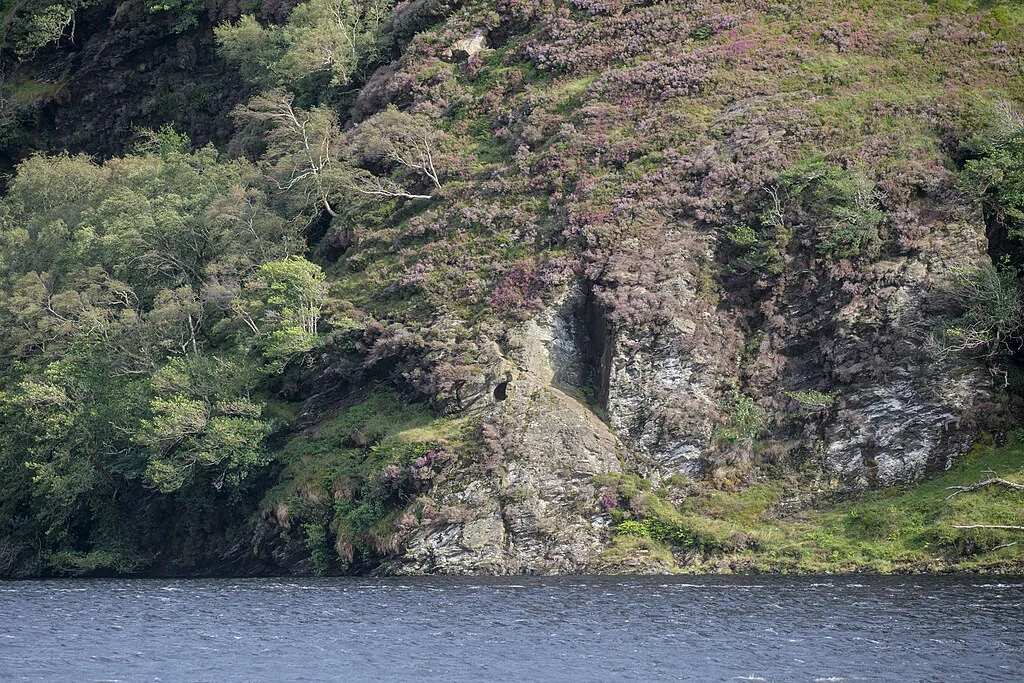
This small cave-like recess is tied to local devotional tradition and is a memorable stop for visitors tracing the monastic story. It is one of the more personal landmarks in the valley, connecting the landscape to the saintly narrative that shaped the site.
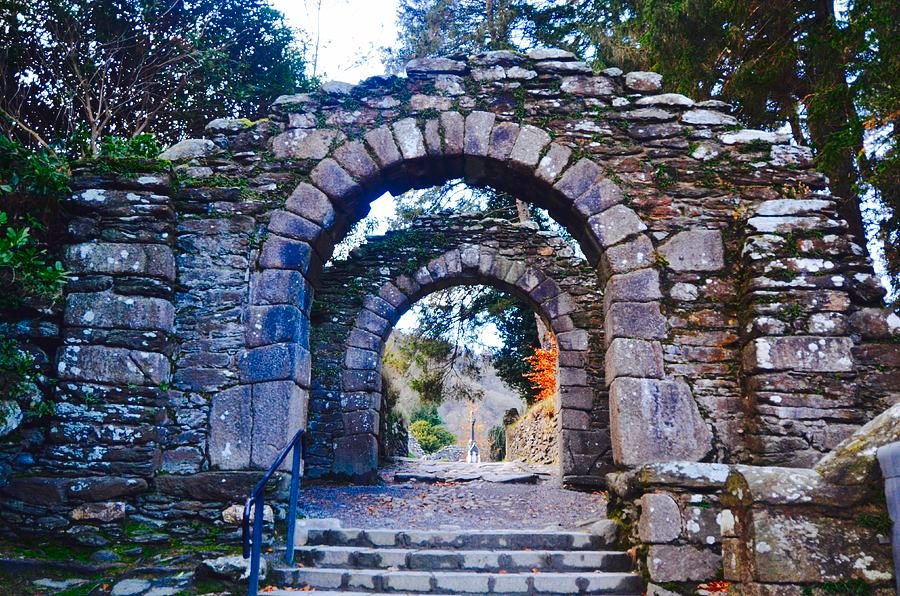
The gateway marks the threshold into the historic core and helps frame the sequence of churches, tower, and graveslabs. As an introduction to the site, it is useful for orienting visitors before they continue deeper into the valley.
All the details about your upcoming adventure in one place
Saint Kevin arrived in the Glendalough valley seeking solitude, and within two centuries his hermitage had become one of Europe's busiest centres of learning. The monastic city that grew around him held workshops, guesthouses and scriptoria.
Its round tower still stands roughly 30 metres tall, its doorway set high above the ground. Norse raiders came repeatedly; the English burned the settlement in 1398. The stones outlasted all of it.
That endurance is what gives the kilkenny wicklow and glendalough tour & sheepdog show its shape. A single day threads together three distinct Irelands. The Wicklow Mountains rise as a granite dome pushed up some 400 million years ago, then scoured by glaciers into the corries and U-shaped valleys visitors cross on the road over Sally Gap. Blanket bog covers the upper slopes. Heather turns the ridges purple in late summer, and the peat holds water like a sponge, feeding the two lakes — the Upper and Lower — that give Gleann Dá Loch its name.
Kilkenny offers the counterweight. Where Wicklow is empty, Kilkenny is dense: a medieval mile of narrow lanes running from the Norman castle to Saint Canice's Cathedral, past slipways down to the River Nore. Black limestone, quarried locally and polished to a marble sheen, faces buildings across the city. Brewing has continued here since the abbey days; the Smithwick's site occupies ground used by Franciscan monks from the thirteenth century.
Between the two sits the working countryside, and this is where a sheepdog demonstration stops being a novelty. Border collies on Wicklow hill farms respond to whistled commands carried across distances no shout would cross. The vocabulary is precise — come-bye, away, lie down — and the dogs read a flock's hesitation faster than a person can. Watching a trial in a field beneath the mountains explains upland Irish agriculture more directly than any interpretive panel.
The combined Wicklow Mountains and Glendalough guided day tour has become the standard way to see all three in daylight hours, which is why kilkenny wicklow and glendalough tour & sheepdog show tours consistently fill through the summer months of 2026. Glendalough's monastic ruins remain free to walk. The valley belongs to everyone who reaches it.
Norse raiders came repeatedly; the English burned the settlement in 1398 — the stones outlasted all of it.
You can cancel or amend your booking up to 24 hours in advance of the tour date. For a full refund, notice must be sent by email before 12:01 AM on the day prior to travel; card or bank processing fees are non-refundable.
Glendalough begins with one man's withdrawal. St. Kevin, of the Dál Messin Corb, retreated to the Upper Lake around 498 and died, by the annals, in 618. His hermitage grew into a monastic city. By the 9th century the valley held churches, workshops and a round tower some 30 metres tall, its doorway raised above ground level. Viking raiders struck repeatedly; the settlement was burned in 1398 by English forces under the Justiciar, and the diocese was merged with Dublin in 1214. A kilkenny wicklow and glendalough tour & sheepdog show now traverses ground that survived four centuries of assault. Kilkenny's story is Anglo-Norman. Richard de Clare, called Strongbow, raised a timber castle above the Nore in 1172; William Marshal replaced it in stone from 1195, and the Butler family purchased it in 1391, holding it until 1967. St. Canice's Cathedral rose between 1202 and 1285 beside an older round tower. The Statutes of Kilkenny, enacted in 1366, forbade intermarriage and the Irish language among the colonists. From 1642 to 1649 the Confederation of Kilkenny governed much of Ireland from the city, until Cromwell's siege in March 1650 ended it. What survives is unusually complete. The Gateway, St. Kevin's Kitchen and the Priest's House stand in the Glendalough valley; the Medieval Mile links Kilkenny Castle to the cathedral. Sheepdog handling in the Wicklow uplands is its own inheritance, worked by hill farmers across generations. Guided Wicklow Mountains excursions of this kind trace granite, monastic ruin and Norman masonry in a single day.
St. Kevin establishes his hermitage beside the Upper Lake at Glendalough.
The annals record the death of St. Kevin; the monastery continues to expand.
The round tower and principal stone churches are raised; Viking raids strike the valley repeatedly.
Richard de Clare, Strongbow, erects a timber fortification above the River Nore at Kilkenny.
William Marshal begins rebuilding Kilkenny Castle in stone.
The diocese of Glendalough is formally united with that of Dublin.
The Statutes of Kilkenny are enacted, restricting Gaelic custom among Anglo-Norman settlers.
Cromwellian forces besiege Kilkenny, ending the Confederation that had governed there since 1642.
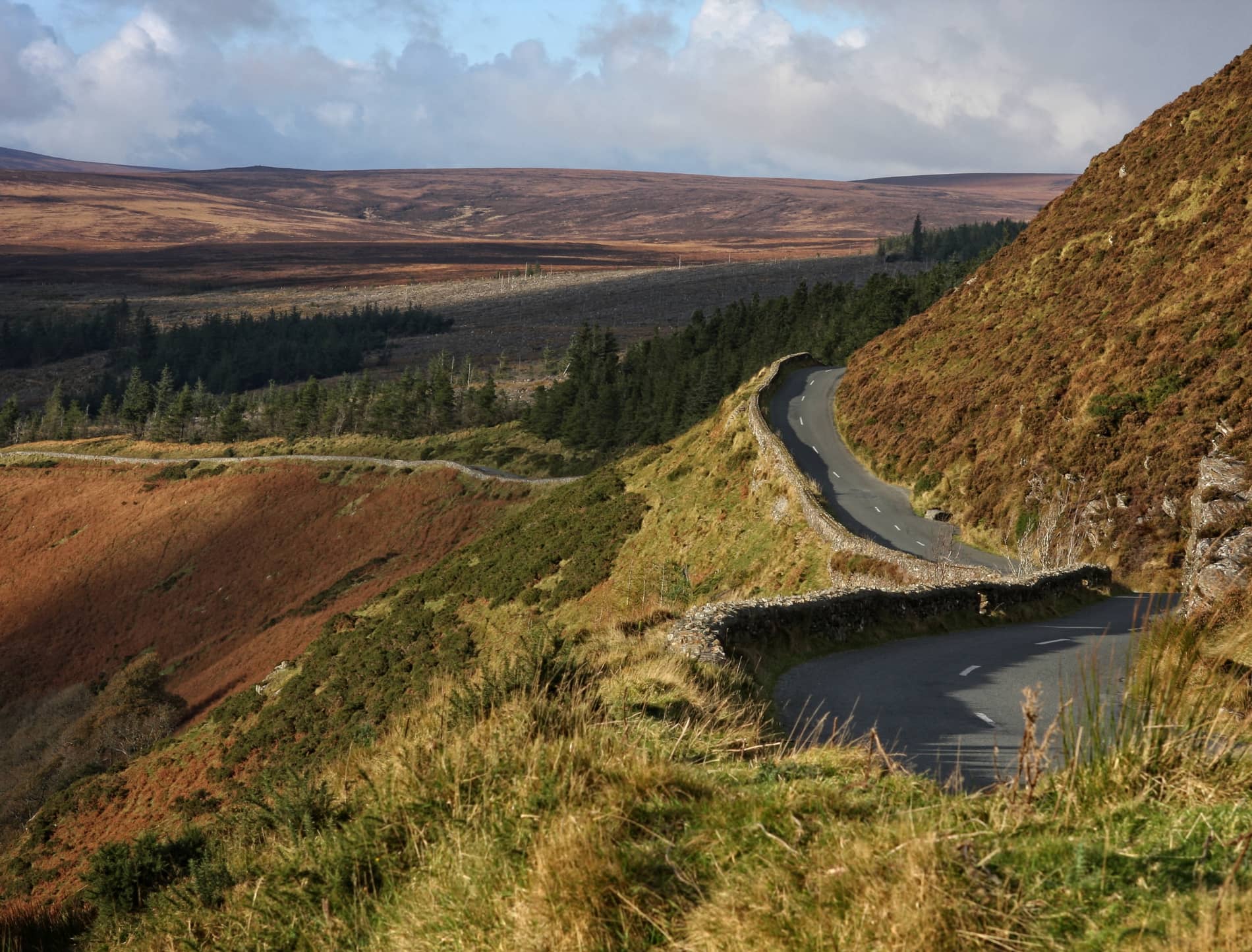
Capture the rolling green hills and deep valleys of the Irish highlands from this elevated pass. It is one of the top locations featured on various kilkenny wicklow and glendalough tour & sheepdog show tours. Focus your camera towards the old peat bogs and winding roads for a classic landscape composition.
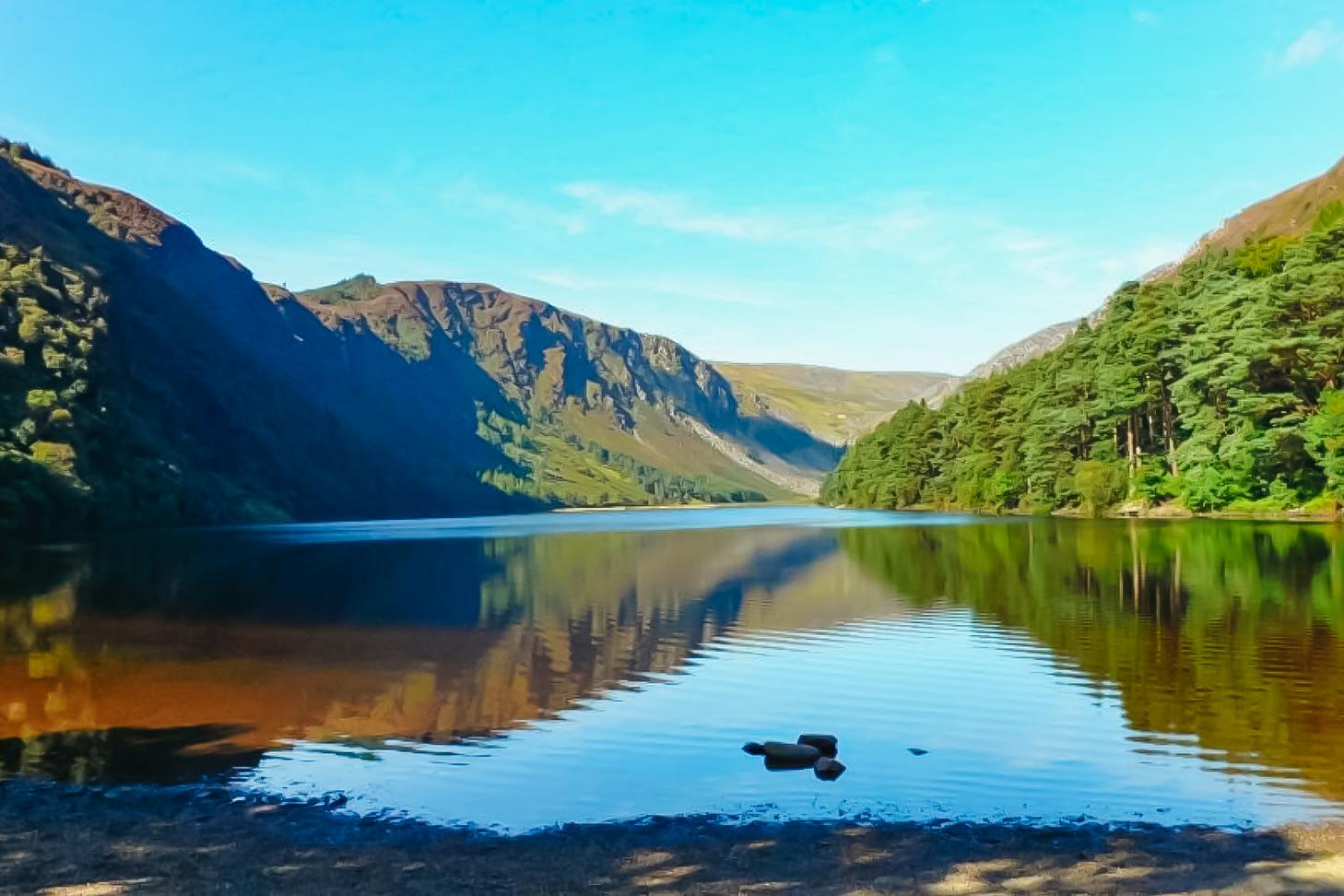
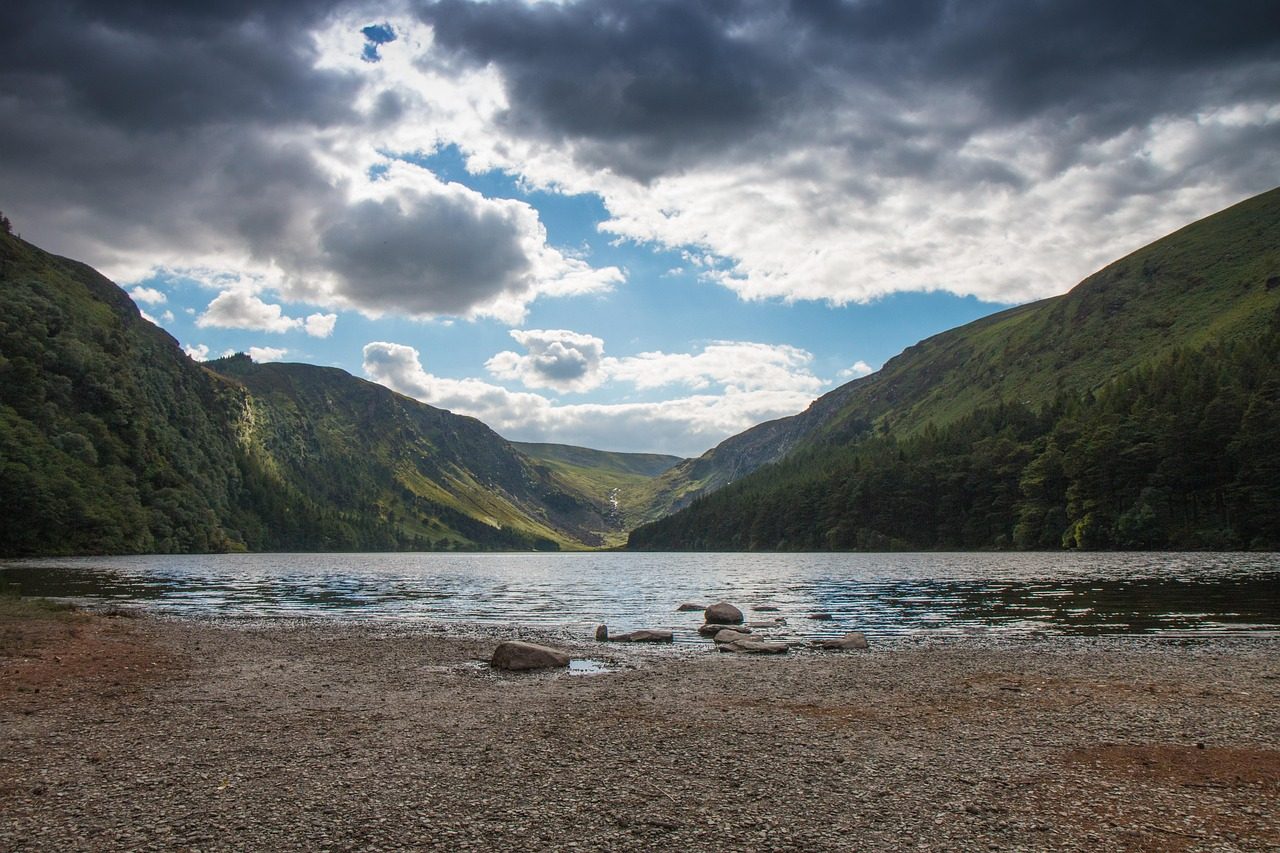
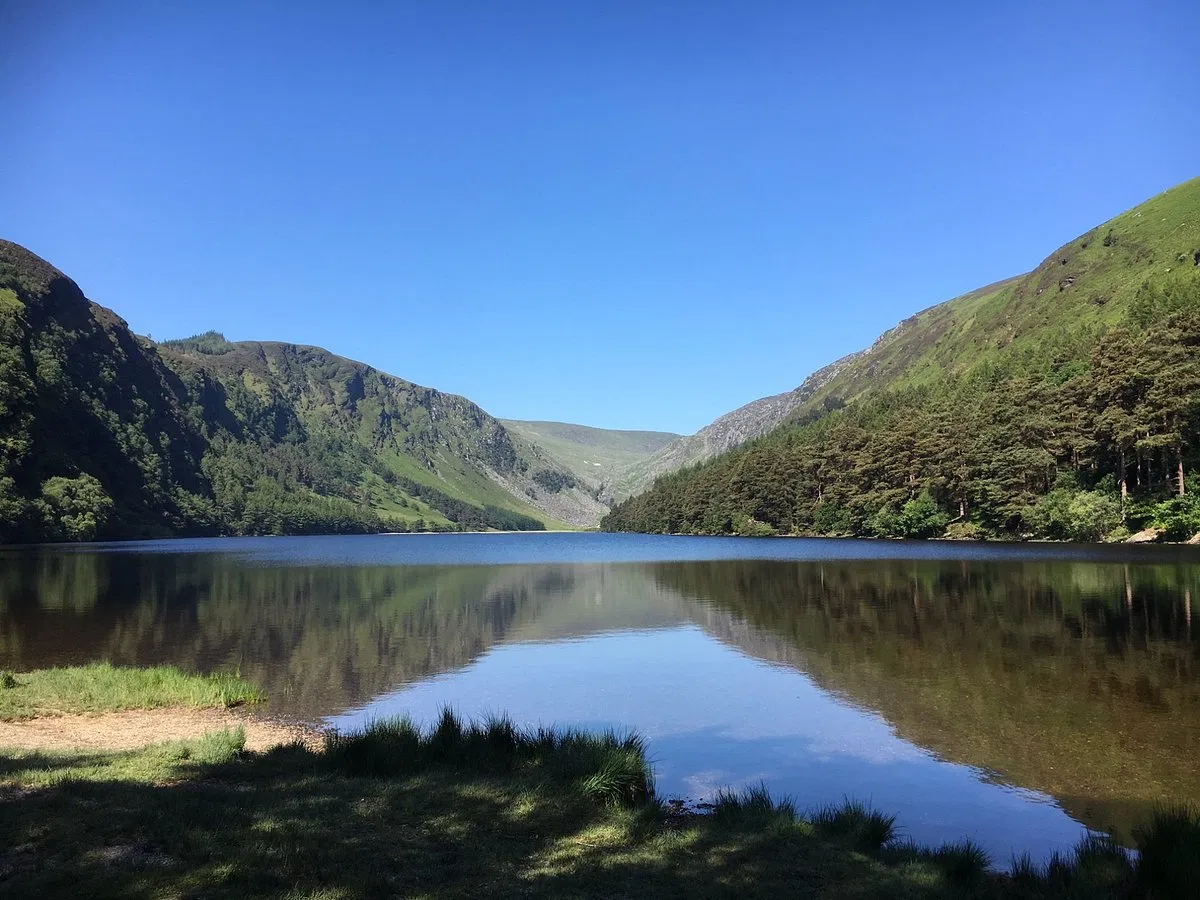
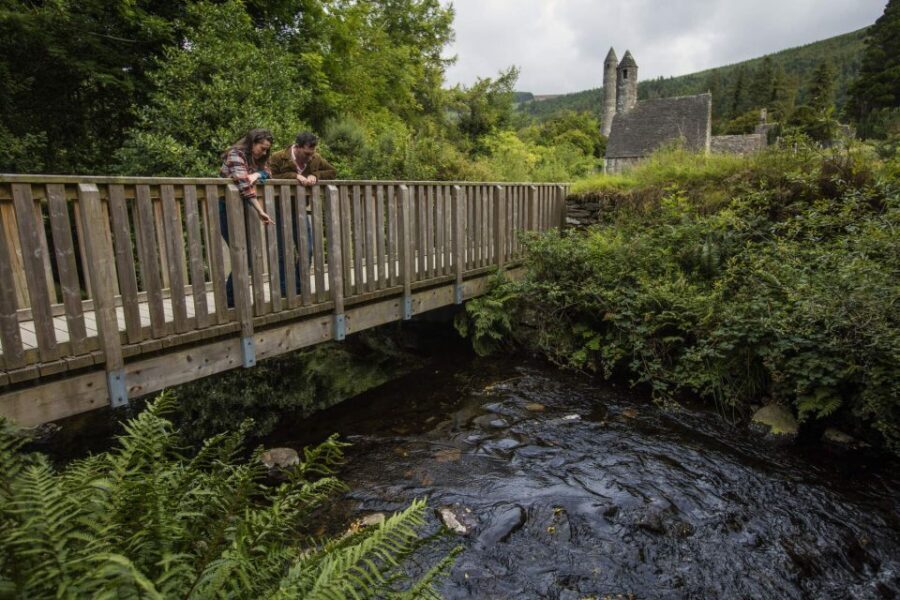
Walk along the water's edge to photograph the dark glacial waters framed by steep, forested hillsides. Bringing your camera to this serene spot is a highlight of the kilkenny wicklow and glendalough tour & sheepdog show tour. Compose the frame with the wooden boardwalk or the pebble beach in the foreground.
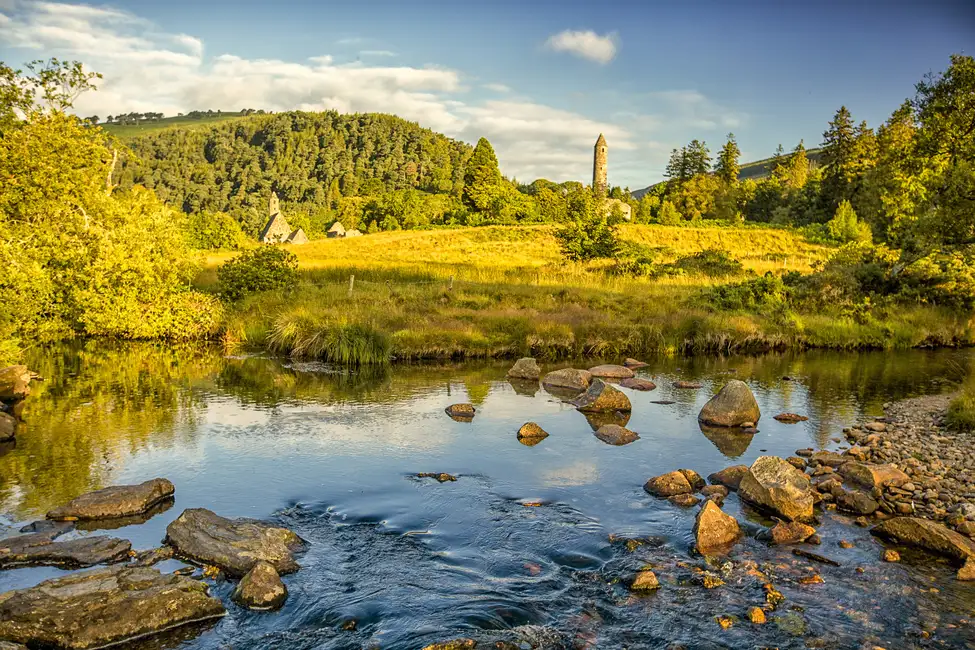
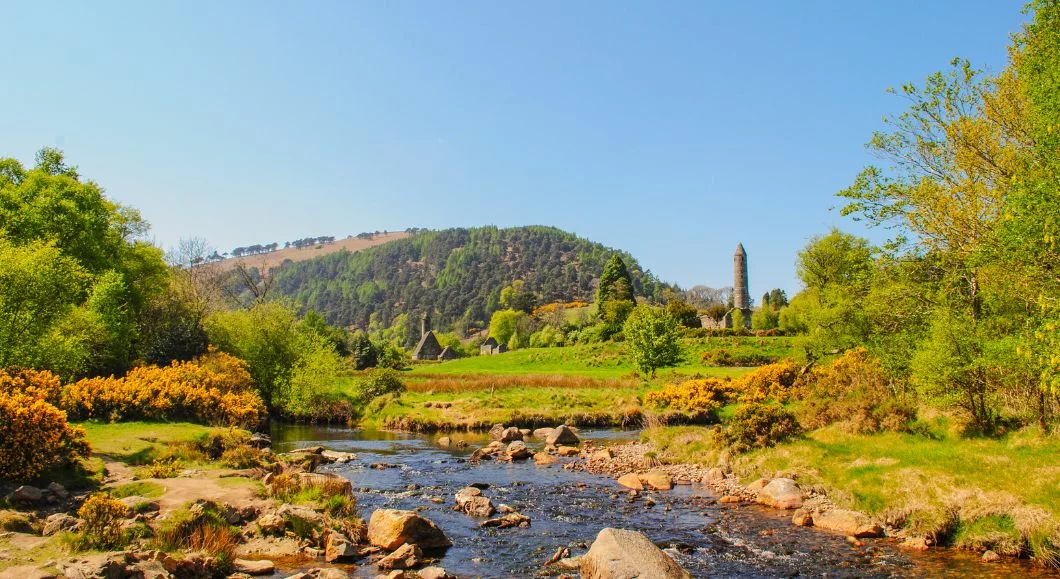
Frame the iconic 10th-century stone tower against the backdrop of the surrounding monastic city ruins. Visitors using their kilkenny wicklow and glendalough tour & sheepdog show tickets will find this angle near St. Kevin's Kitchen highly rewarding. Use the ancient gravestones to add depth and historical context to the scene.
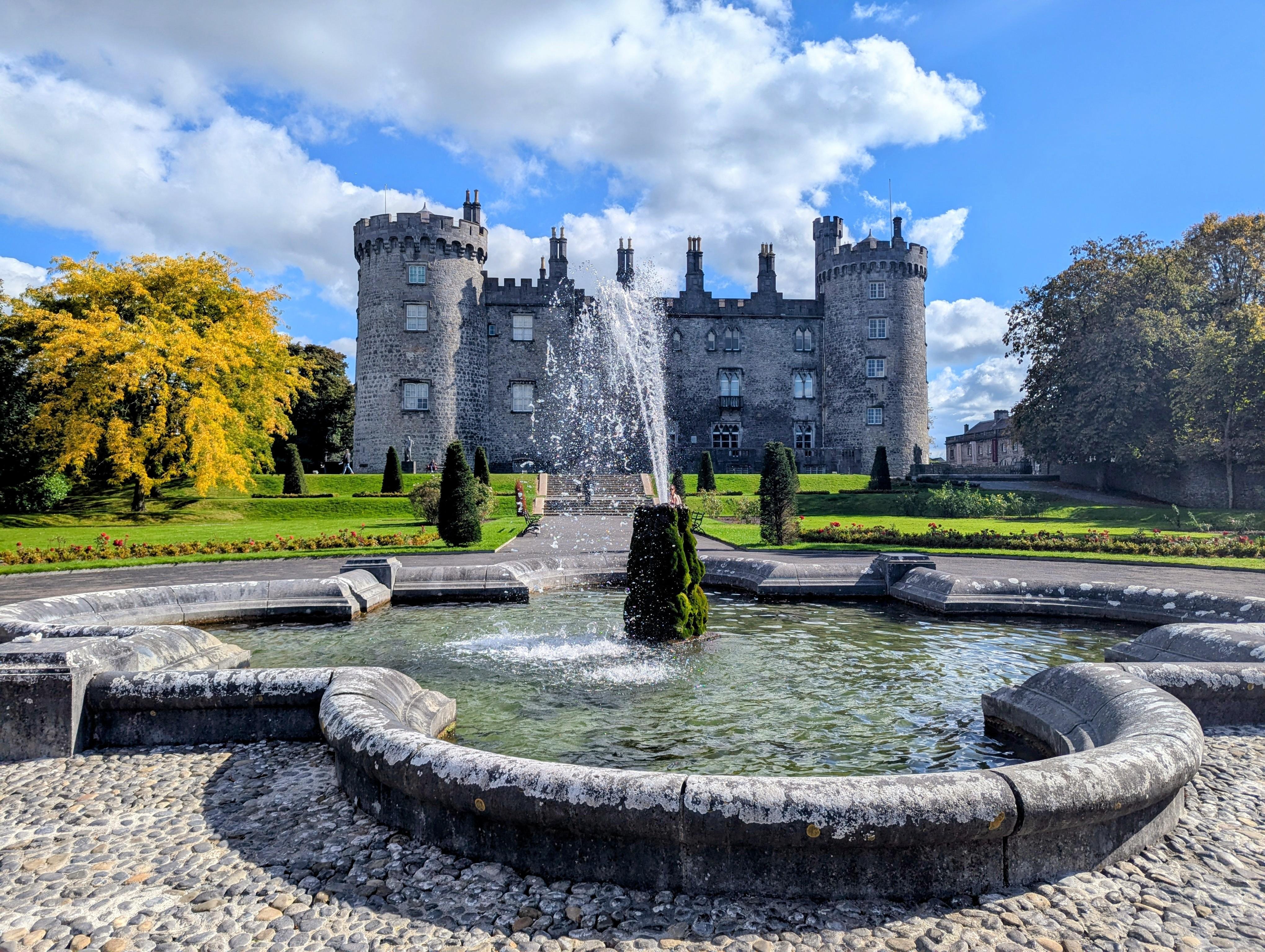
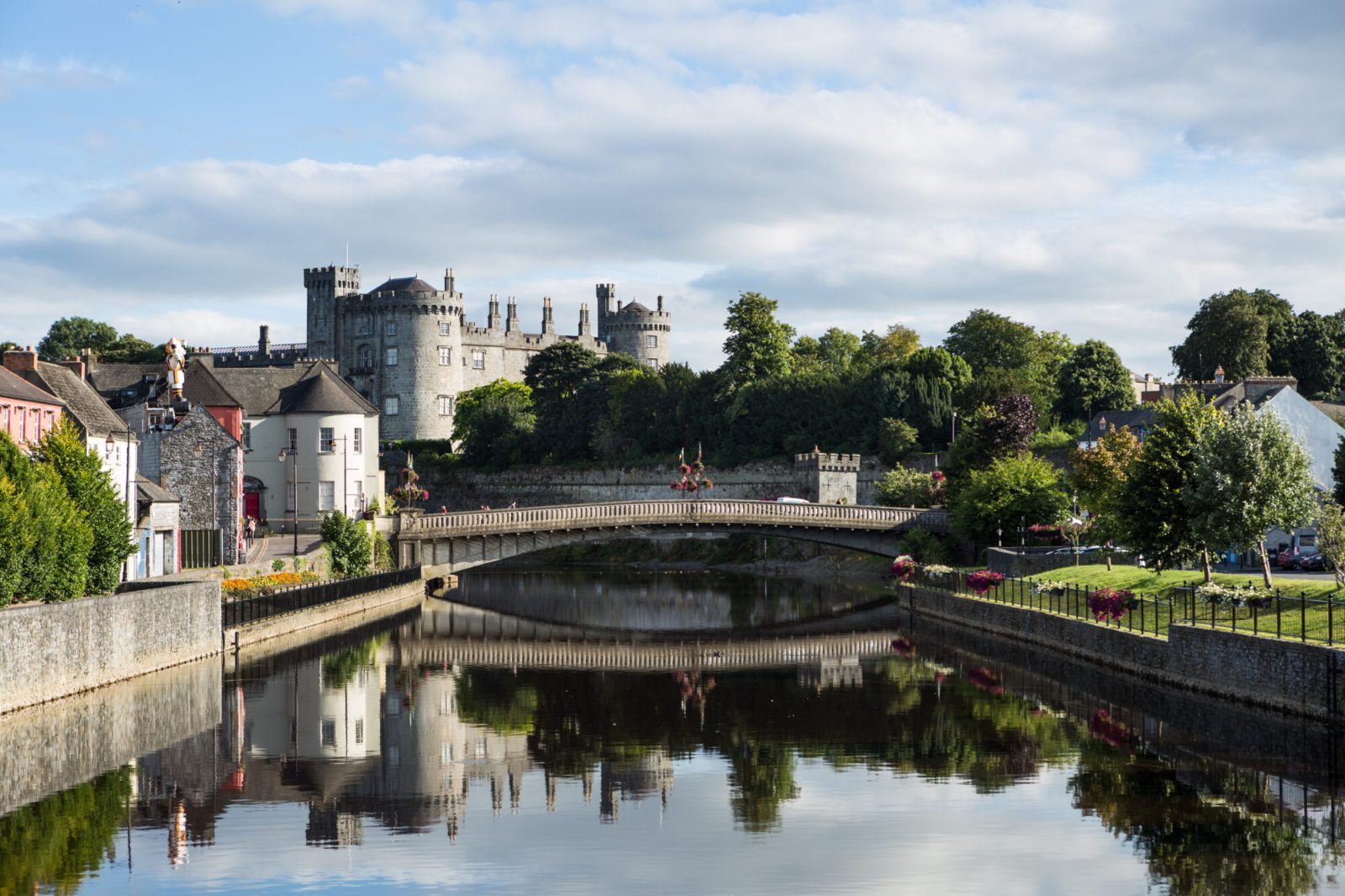
Stand on the pedestrian pathway overlooking the River Nore to shoot the imposing medieval facade of Kilkenny Castle. This spot highlights the medieval city of Kilkenny before you head into the mountains. The reflection of the castle walls in the water offers an excellent composition on a calm day.
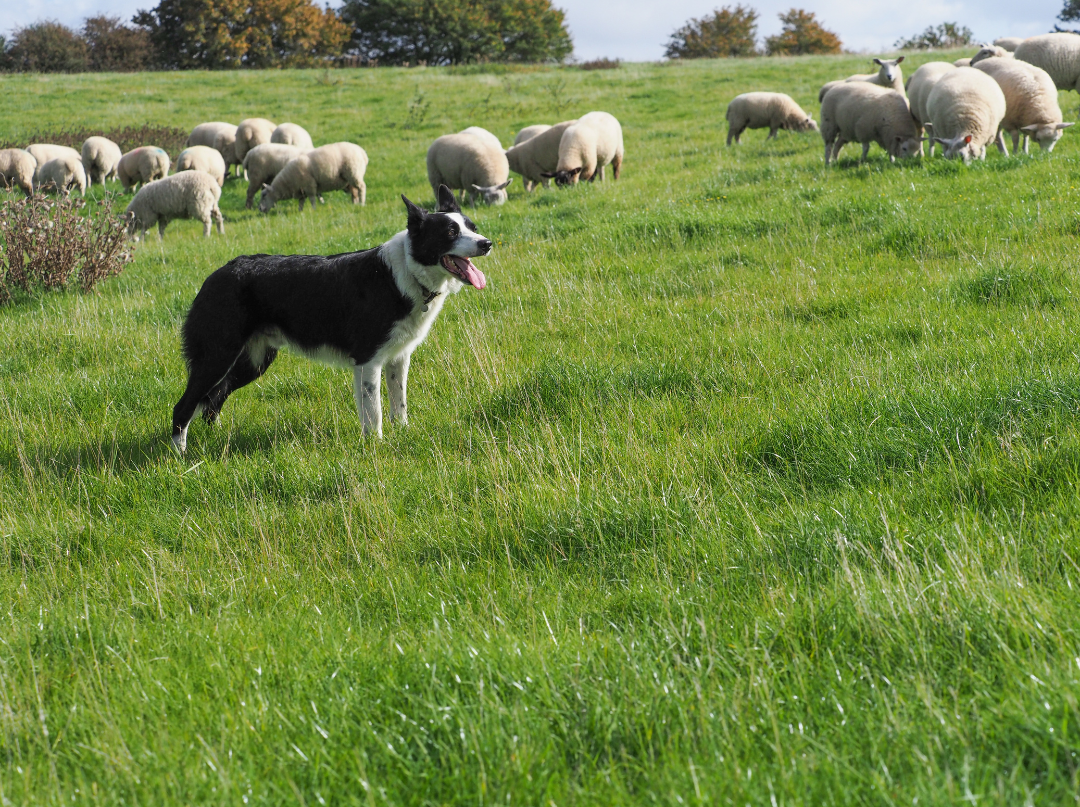
Photograph the agile border collies demonstrating their herding skills on the grassy slopes of this working farm. This live demonstration is the centerpiece of the kilkenny wicklow and glendalough tour & sheepdog show. Capture action shots of the flock moving in unison under the guidance of the farmer.
The kilkenny wicklow and glendalough tour & sheepdog show is a coach day out that works well for families who can handle a full itinerary and a few countryside stops. Expect a mix of city walking, Glendalough’s uneven trails, and a live sheepdog demonstration that usually keeps children engaged.
Bring a lightweight stroller if you need one, but plan to fold it for dirt paths and any short walks around Glendalough. The sheep farm stop is brief, so a carrier can be easier than a bulky buggy.
Wild Rover says this tour is not suitable for children under 3, so it suits older toddlers and school-age kids better. The sheepdog trial and the chance to see lambs make the rural stop the most child-friendly part.
The coach is air-conditioned and has 4G WiFi, which helps on a long day between stops. Family-friendly comfort is better on board than at the trails, so use the coach for snacks, shade, and downtime.
During the sheep farm visit, children can watch the handler and dogs work at close range, and may also get to hold lambs when available. Keep little ones near you, since this is a live farm rather than a staged show.
The tour uses 2h30m in Kilkenny, 2h15m in Glendalough, and 30 minutes at the sheep farm, so it suits kids who can manage several transitions. If your child needs frequent breaks, the Kilkenny Wicklow and Glendalough tour is easier with an older family member to help.
For the kilkenny wicklow and glendalough tour & sheepdog show, lunch is usually best planned in Kilkenny City, then kept simple near Glendalough. Kyteler’s Inn works well for a sit-down meal, while Laragh/Glendalough has a few close-by cafés and pub lunches for a faster stop.
Good for a fuller break on the Medieval Mile. The kitchen serves traditional Irish dishes and casual bar food; it can be busy at peak lunch and early evening, so group bookings help.
Everything you need to know for your journey
Please contact us for more information.
Join thousands of happy travelers who have discovered this incredible experience
Book Your Experience Now